


For LGBTQ people in the Republic of Türkiye, commonly known as Turkey, things are grim — and rapidly getting grimmer.
Between September 12 and 14, 2026, the authoritarian government of President Recep Tayyip Erdoğan launched a police operation called “Ailem Güvende,” or “My Family Is Safe,” a surprise crackdown in provinces across the country targeting LGBTQ organizations, activists, and venues.
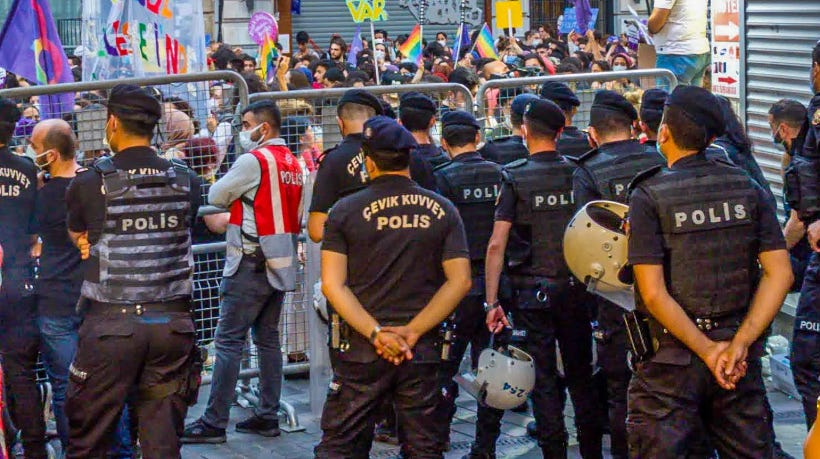
The operation accused LGBTQ people of attacking “family values,” and dozens of people were arrested, including activists and at least one journalist. Legal proceedings were initiated against nine organizations and thirteen companies.
The operation has continued since then, and more than 80 people may still be in detention. Amnesty International says authorities have also blocked or restricted hundreds of LGBTQ-related and other social-media accounts and websites.
But the story has barely broken into the international mainstream media, including in the United States.
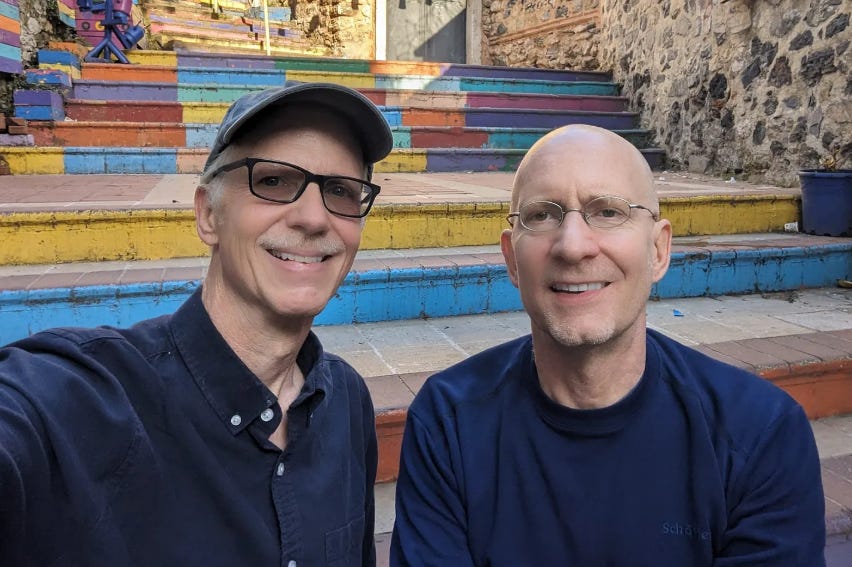
My husband Michael and I are a gay couple who lived in Turkey for more than five months on two different occasions, and we very much love the country and its many diverse residents.
We still have friends there, and we find these current events to be heartbreaking — and we’re upset that more people don’t seem to know about them.
“People here are scared,” says Deniz, a gay friend living in Turkey. “I’ve had a rough week.”
[“Deniz” is not their real name. We’re using a pseudonym at their request to protect their identity. Others we contacted declined out of fear to be quoted even anonymously.]
“Friends of mine have been arrested, and I’m worried for them,” Deniz adds. “Nobody knows what the future will hold. People don’t really understand what the red line is anymore, and what may or may not get them in trouble.”
In July 2026, the Virgin Voyages cruise ship Scarlet Lady and its 2,000 passengers — a “gay cruise” — was denied permission to call at different Turkish ports because the boat was “known for behaviors that do not align with the structure of our society and our moral values.”
This event did receive lots of international media attention — probably because it involved wealthy Westerners.
But the denial of entry to that gay cruise and this most recent crackdown against LGBTQ Turks is just the latest in a long escalation of attacks on sexual minorities.
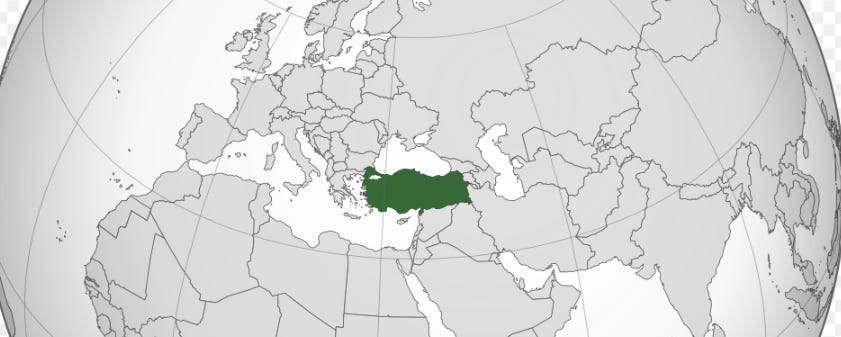
Turkey is a Muslim-majority country — somewhere between 90% and 99% Muslim, depending on the source and definition.
(And it’s worth emphasizing that most of the LGBTQ people and activists currently being targeted by the government are also Muslim.)
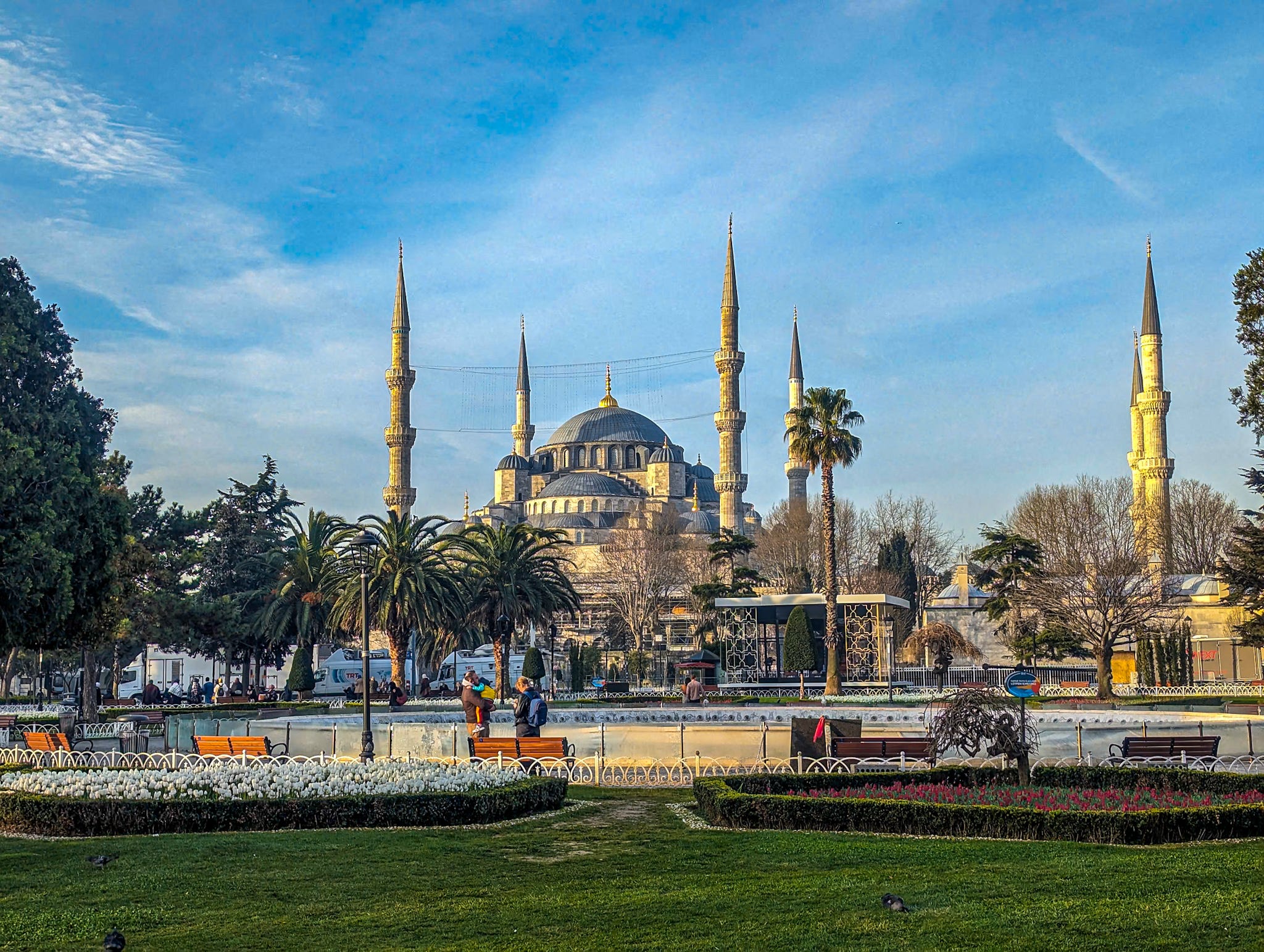
Since its founding as a republic in 1923, Turkey has been a formally secular state strongly influenced by Western-oriented reforms. It was once widely regarded as one of the strongest examples of a “moderate” Muslim-majority democracy.
In the 1920s and 1930s, Mustafa Kemal Atatürk, the founder and first president of modern-day Turkey, was a progressive force (at least in some respects), secularizing and modernizing the legal and education systems, and expanding rights for women. He is still widely considered a national hero.
The current majority party, AK Party led by President Erdoğan, initially pursued EU-related legal and economic reforms, leading some observers to view it as a moderate, Muslim-rooted democratic party.
But since then, he and his government have ruled in an increasingly authoritarian way, attacking minorities and using the police to crush dissent.
Erdoğan has blamed the country’s falling birthrate on the “deviant movement” of LGBTQ “perverts.”
His government has also repeatedly banned LGBTQ Pride events, but activists have since marched anyway, spreading the word on social media and cleverly outwitting the police — marching on narrow cobblestone streets, for example, where the police water cannons cannot reach.
In 2021, the two of us joined the marchers on those cobblestone streets, and we were tear-gassed along with everyone else.
As Erdoğan’s popularity has fallen amid a disastrous economy, he has increasingly aligned himself with socially conservative hard-liners to maintain power.
We were living in Istanbul again in 2024 when Erdoğan’s primary political opponent, Ekrem İmamoğlu, was elected mayor of Istanbul in a landslide. People thronged the streets in happy celebration.
Last year, Erdoğan had İmamoğlu arrested on trumped-up “corruption” charges, and he’s still imprisoned.
Why hasn’t there been more international attention paid to İmamoğlu’s arrest and Turkey’s most recent anti-LGBTQ crackdown?
“The Turkish government knows Europe needs them,” Deniz explains. “Turkey is a bridge between Russia, Ukraine, Syria, and elsewhere, stemming refugees from those areas from reaching the EU.”
In fact, in a 2016 agreement between Turkey and the EU, the EU committed roughly €6 billion to support refugees in Turkey, especially Syrians, and also to accept returning migrants.
Critics say Europe is using the agreement as a way to block refugees from reaching mainland Europe while also giving the Turkish government political leverage over the EU.
Meanwhile, the United States under Donald Trump has continued to be an ally of Turkey, despite — or maybe because of — its increasingly authoritarian government.
Turkey has been a member of NATO since 1952, giving NATO strategic access to the Black Sea, the Middle East, and the Eastern Mediterranean.
Still, the previous administration of U.S. President Joe Biden strongly criticized Turkey’s government and documented its many abuses.
But Trump has a warm relationship with Erdoğan, calling him a “strong man” and “a hell of a leader” — a sentiment he’s frequently expressed about other authoritarian leaders like Russia’s Vladimir Putin, North Korea’s Kim Jong Un, and Hungary’s Viktor Orbán.
In 2025, nearby Hungary banned Budapest Pride, in part because of the Trump Administration’s actions. According to Orbán, Budapest Pride had only been allowed to exist because of pressure from the Biden Administration; Biden’s ambassador to Hungary even marched in the annual event.
“But now the world has changed, and the Americans have called these types of ambassadors back home,” Orbán said at the time. “It’s clear that [Pride] won’t have international protection.”
In April 2026, Vice President JD Vance visited Hungary and publicly praised the country’s “real progress” under the authoritarian leader.
But Orbán still lost reelection in a faith-in-humanity-restoring landslide.
“What’s happening in Turkey is all about the total obliteration of geopolitical norms and standards unleashed by Trump all around the world,” Deniz argues.
According to Deniz, friends in Turkey are worried Erdoğan’s next focus will be the rights of women.
This won’t be anything new either; domestic abuse is a real problem in Turkey, and women are poorly represented in almost every area of public life.
On July 1, 2021, Turkey formally withdrew from the Istanbul Convention, an international treaty meant to protect women from violence, and thousands of women and their supporters marched on İstiklal Street, just steps from our apartment.
But a massive police force descended, trying to prevent the protesters from marching, eventually using tear gas and rubber bullets to disperse the crowd.
The tear gas drifted right into our apartment — and it was so strong we were soon choking. It was the second time we were tear-gassed while living in Turkey.
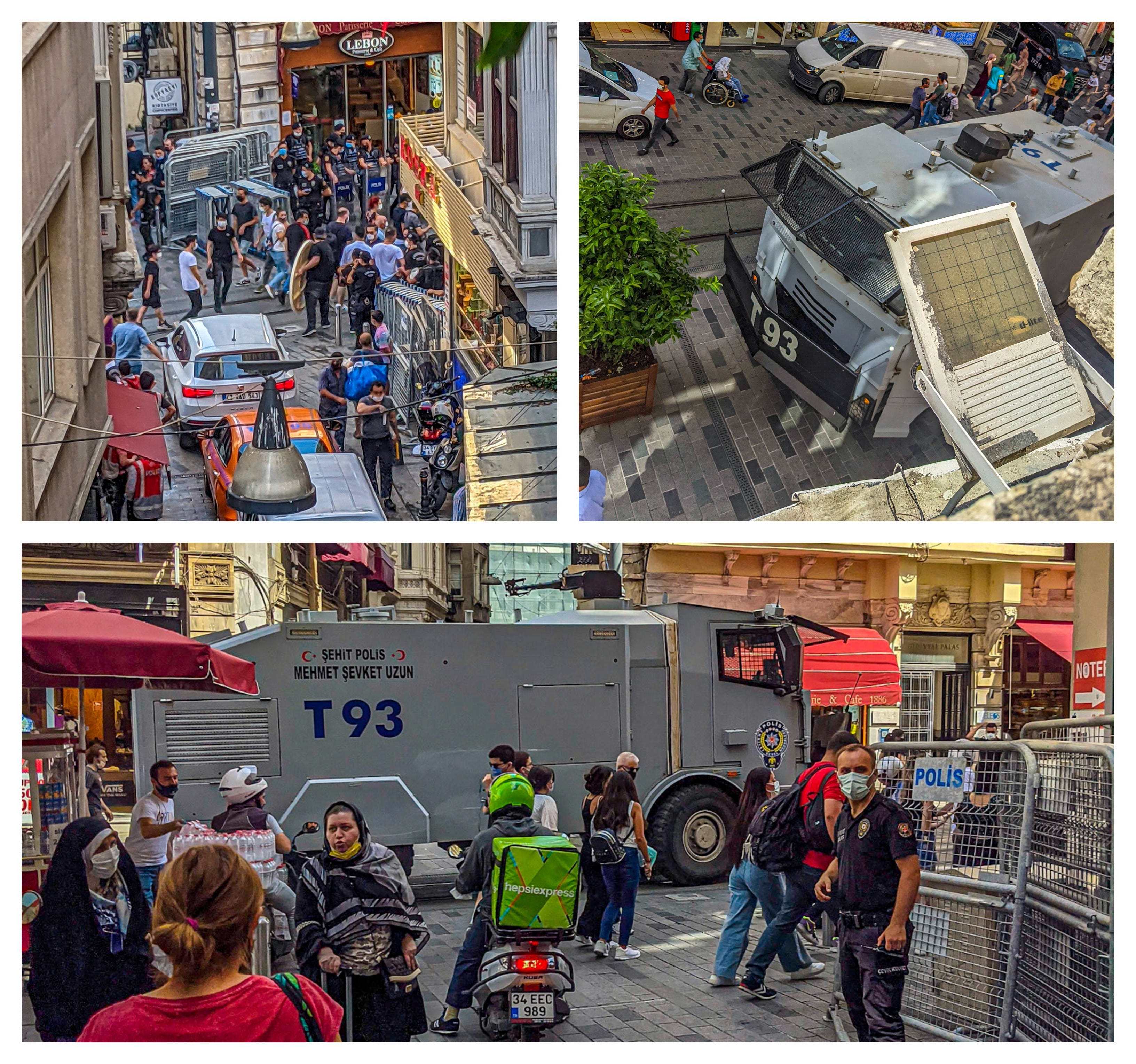
“I’m not optimistic about the future of Turkey,” Deniz tells us. “The digital surveillance and entire system has been structured around intimidation, to scare anyone opposing the government into submission, not to talk about politics, not to demonstrate. You should see how it is when there’s a demonstration, even a handful of people. They shut down entire areas and have many busloads of police.”
We’ve written before about the problems of “unofficial” boycotts of homophobic countries — how they often hurt the LGBTQ people who most need help.
But tourism is a major part of Turkey’s economy. In 2024, the country ranked fourth globally in international tourist arrivals and seventh in tourism revenue, with travel and tourism representing nearly 12% of GDP, supporting about one in ten jobs.
Tourists do have economic leverage, and widespread disapproval could have an impact. Unfortunately, the issue isn’t receiving widespread attention.
There’s also the moral issue of not wanting to visit a country because of its government’s actions. We strongly support the Canadian boycott of America, for example, simply on the grounds that the U.S. government has acted toward that country in a profoundly unethical way.
And then there are “personal safety” concerns. In all our time in Turkey, we never felt anything except the Turks’ justifiably famous hospitality.
But things feel different now.
“LGBTQ life still remains here,” Deniz says. “It’s just that the spaces and venues where it’s accepted or tolerated have been drastically reduced. And I’d recommend against public displays of affection, rainbow-branded clothing or accessories. And remove any negative social-media posts about the country and its politicians before visiting.”
As for us, we won’t be returning to Turkey, especially given the government’s recent crackdown on journalists and, with AI, its increasingly sophisticated ability to track people’s histories.
Turkey is one of our favorite countries. But having written this article, we can’t return — not until Erdoğan’s government falls.
See also…
We Rented an Apartment in Istanbul. When We Returned a Week Later to Move in, the Landlord was Gone.
We Lived in a Conservative Area of Istanbul. It Tested the Limits of My Tolerance.
The Shocking Thing I Found Inside a Turkish Hammam
Brent Hartinger is a screenwriter and author. Check out my other newsletter about my travels at BrentAndMichaelAreGoingPlaces.com. And order my latest book below.

Guess I won’t be visiting Turkiye anytime soon…
This is one reason my husband didn’t want to move to Kuala Lumpur, Malaysia as retired expats. He felt the conservative government could turn at any time. We’re enjoying Bangkok, Thailand, anyway!