

I always wanted to be a writer.
I sold my first short story at age 21, and within three years, I was supporting myself with a freelance career: mostly celebrity journalism at first, but then I started selling my novels and winning awards for my screenplays and plays.

I’ve spent most my life around artists, especially writers. And I’ve come to see that most of us are motivated to create art for three different reasons:
Self-expression and creativity. This is the biggie: it feels really good to create.
Recognition and acclaim. It’s also very validating to have other people appreciate whatever we’ve created.
Money. Hey, we all gotta eat.
But it’s not enough simply to want these things. An artist also needs realize some success in at least two out of these three areas — at least if they want to keep working long-term.
And I think this is true at both the professional and amateur level. A pure hobbyist may never make any money, but they still want someone to occasionally come along and say, “Oh, did you paint this? You’re very talented!”
We writers work in isolation. For the first part of our artistic process, we have to be motivated solely by our desire to express ourselves and create. We can dream of recognition and financial success, but that doesn’t come until much later — if it comes at all.

But what if recognition and/or financial success never come? Well, most writers don’t keep going either.
Since the rise of self-publishing, I’ve had a lot of people tell me, “I don’t care if my book sells any copies — I just want it out there.”
Same for Substack newsletters. Many people say, “It’s not about making money — I just want a place to put my thoughts.”
But if their book or newsletter doesn’t sell — and if they’re also not getting lots of positive feedback — very few of these writers keep writing.
This isn’t a judgment on my part. I’m just stating the obvious: it’s easy to say we’re motivated solely by the desire to create, but the reality is more complicated.
We’re human. No one is an island.
But this brings me to where I am as an artist these days.
Regular readers of this Substack newsletter know that for the last few years, I’ve been frustrated by the almost complete implosion of the traditional creative industries in which I’ve worked: New York publishing and Hollywood movie-making.
A few months ago, I said it outright: things are so bleak that it’s now essentially pointless to try to break into writing using any traditional method.
At the same time, I’ve recently been preaching the possibilities of “new media” and alternative methods of distribution.
But honestly? I think things are changing there too.
I self-published a new novel this summer, and during the marketing, I kept hearing the same thing over and over — namely, that novels are dying out.
My book was named Book of the Month by an online reading group with tens of thousands of members. But the moderator admitted to me that participation is way down — so much so that my book won the Book of the Month honor with a mere five votes. And there was virtually no participation in the discussion on the book.
She also said something I heard over and over: “People don’t seem interested in books the way they used to. Even my kids — they used to be such big readers, but not anymore.”
But people didn’t need to say this to me — I could feel it in the air.
Galadriel said it best in The Lord of the Rings: The time of the elves is over.
And by “elves,” I mean “writers of fiction.”

I don’t need to tell you the reason why: social media, obviously. Even if people were interested in books, most of us are rapidly losing the ability to focus long enough to read one.
And, of course, there’s also AI, which is about to land like a nuclear bomb on whatever remains of the literary landscape.
I’m thrilled that so many people purchased my latest book, and that almost everyone who read it seemed to enjoy it.
But it didn’t make nearly as much of a splash as any of my previous novels, and it didn’t sell as well either, despite the fact that I have the largest social media platform I’ve ever had.
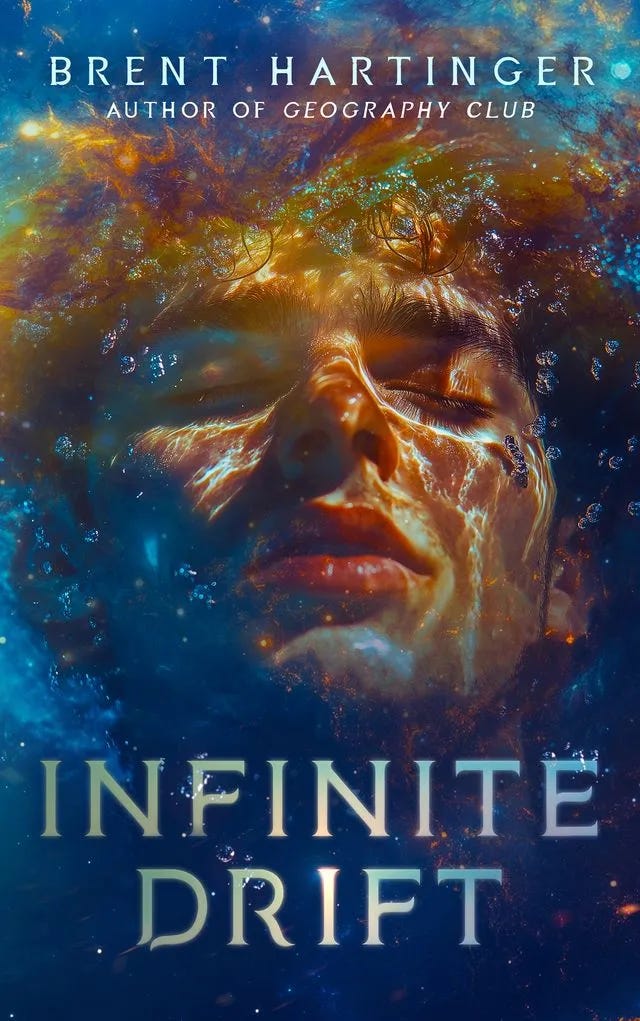
I said before that writers are motivated by three things. In that respect, how did this book stack up in satisfying me?
Self-expression and creativity. It was great! This was one of the most satisfying projects I’ve ever written — and I think it’s one of my best.
Recognition and acclaim. It wasn’t nothing, but it was also nothing like my previous books.
Money. It wasn’t nothing here either, but once again, it was also nothing like my previous books.
So was publishing this book worth it?
Honestly, I’m not sure. But maybe not: I’m not rushing to self-publish another book any time soon.
My primary online platform — the travel newsletter that I write with my husband, Michael — is still doing very well, for which I am extremely grateful. But our growth has stalled, and the traffic has absolutely cratered on one of our syndication partners — the victim of AI replacing content websites and SEO. That means one of our four major revenue streams is disappearing, probably for good.
And my agent is still circulating my graphic novel. But come on: does anyone really think a publisher is going to pay my artist and me big bucks to finish the project when, in six months, they’ll be able to have AI do it all for free?
It’s the same story in almost every creative industry.
This article is turning out to be more depressing than I intended, but the truth is, if you’re an artist in 2025 — or if you’re even interested in the arts — I think maybe you should be depressed.
Look, I’ve been doing this “writing thing” long enough to know that the world is constantly in flux — always changing. The world has rarely been “great” for artists — especially writers — yet somehow, we’ve always found a way to survive.
Hey, even Middle-earth didn’t end when Galadriel and the elves all left for the Undying Lands. It just became something different.

Here in our world, the “microseries” market is booming — that is, TV episodes of one minute or less, made for modern attention-spans.
And I still think there is “gold” in them-thar social media hills — if you’re willing to play the increasingly craven platform game.
Also, I’m writing this essay based on my own experience — and, er, the experience of literally all of my artist-friends. But your mileage may still vary.
I do think the world has changed, even more than most people realize. Two of the three things that motivate traditional artists — the things that enable us to keep producing — are becoming much harder to realize.
And it’s going to get worse.
So what’s the answer?
I wish I had one. Does anyone know of a good deal on a boat to the Undying Lands?
Brent Hartinger is a screenwriter and author. Check out my other newsletter about my travels at BrentAndMichaelAreGoingPlaces.com. And order my latest book, below.

As someone who's long dreamed of being a novelist, I feel this too. When I was a teenager and fell in love with reading for really the first time, that's what I wanted to do as well -- that's what I thought a "writer" was, someone who wrote novels.
It was only when, as a freshly minted college graduate with an English major, that I realized, "huh... so you really can't do this for a job, unless you publish something and lightning happens to strike, or you're already rich."
So, I turned to journalism and became a newspaper reporter, which -- though it wasn't writing fiction -- was still writing for a living. And actually I loved it, though I'd never guessed that's where I'd have ended up when I was in school.
Later I left journalism -- that's crumbled now too, as we all know -- but I am glad I got the chance to write for a living under my own byline; people knew me and it mattered what I wrote, for the small town paper where I worked. Still, though, for many years I never considered this "real" writing in the way I looked at the authors I grew up reading.
The reason I share all this is, I do ask myself sometimes, what is it about writing that I'm attracted to -- what got me attracted to it in the first place, and what pulls me in now? Should I be so fixated on the novel, when really it's just one form among many kinds of writing we can do? And, have I elevated that form purely because other people/society/etc. have told me that's what I should elevate?
I write a newsletter too, and I've had a blast doing it. I do wonder, because while I've sat down and written short stories, I never can seem to devote myself to the project of writing a novel -- am I already getting my writing itch scratched by my newsletter? I interact with readers, they write me back, some of them pay me... like, isn't that what this is supposed to be about? And in 2025, it looks different than it would have in 1985, but maybe... who cares?
I don't know. I still wrestle with this. I still would love to write a novel that loads of people would read and it would be a best-seller, etc. Maybe I will do it! But the tension pulls me in both directions, you know? If that makes any sense... 😀
I'm afraid you are correct, and I am appropriately bitter and depressed. Feeling very lucky, though, to have had my career when I did, and sad for those who are faced with the huge uphill climb as they attempt to make it in these industries.